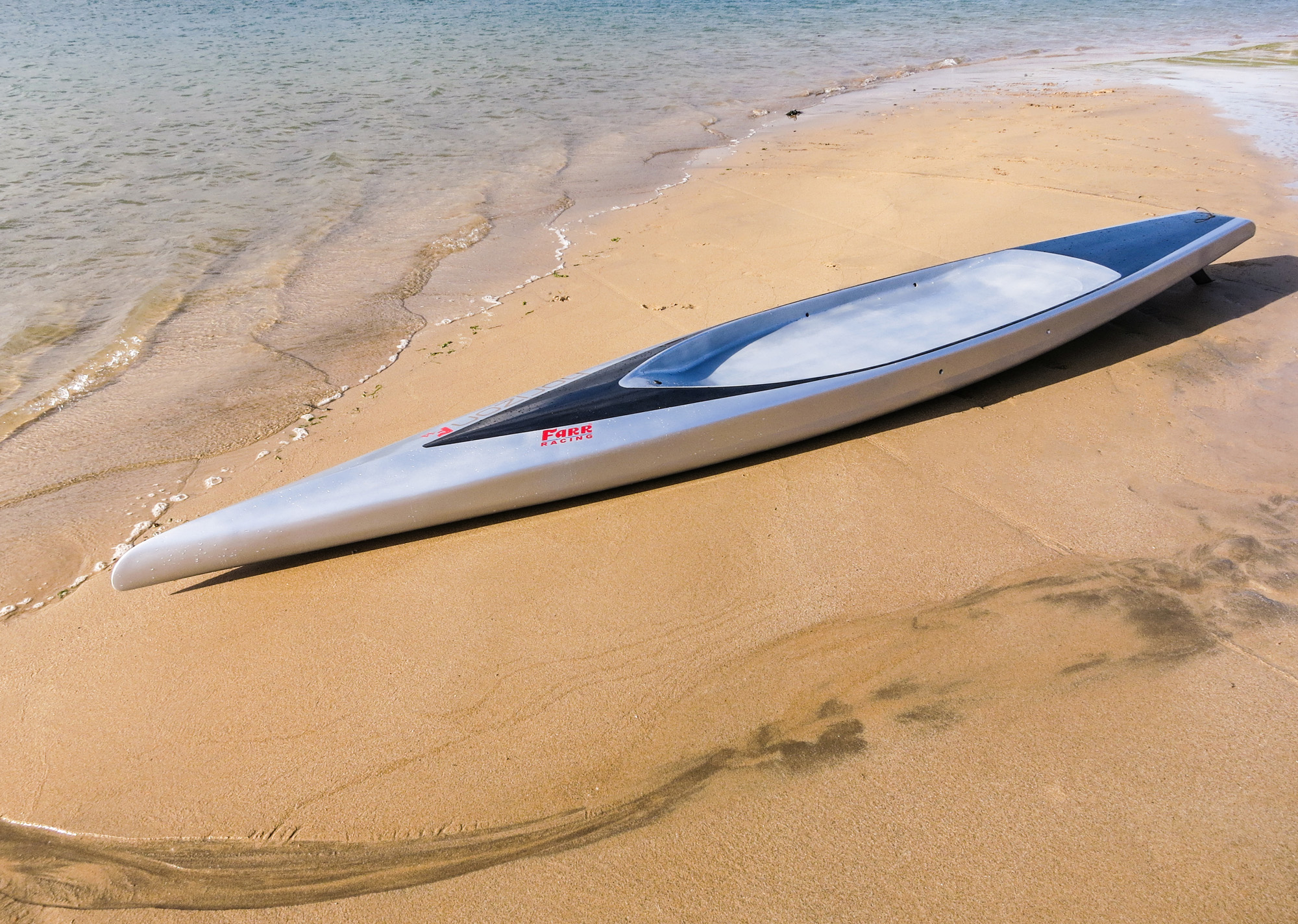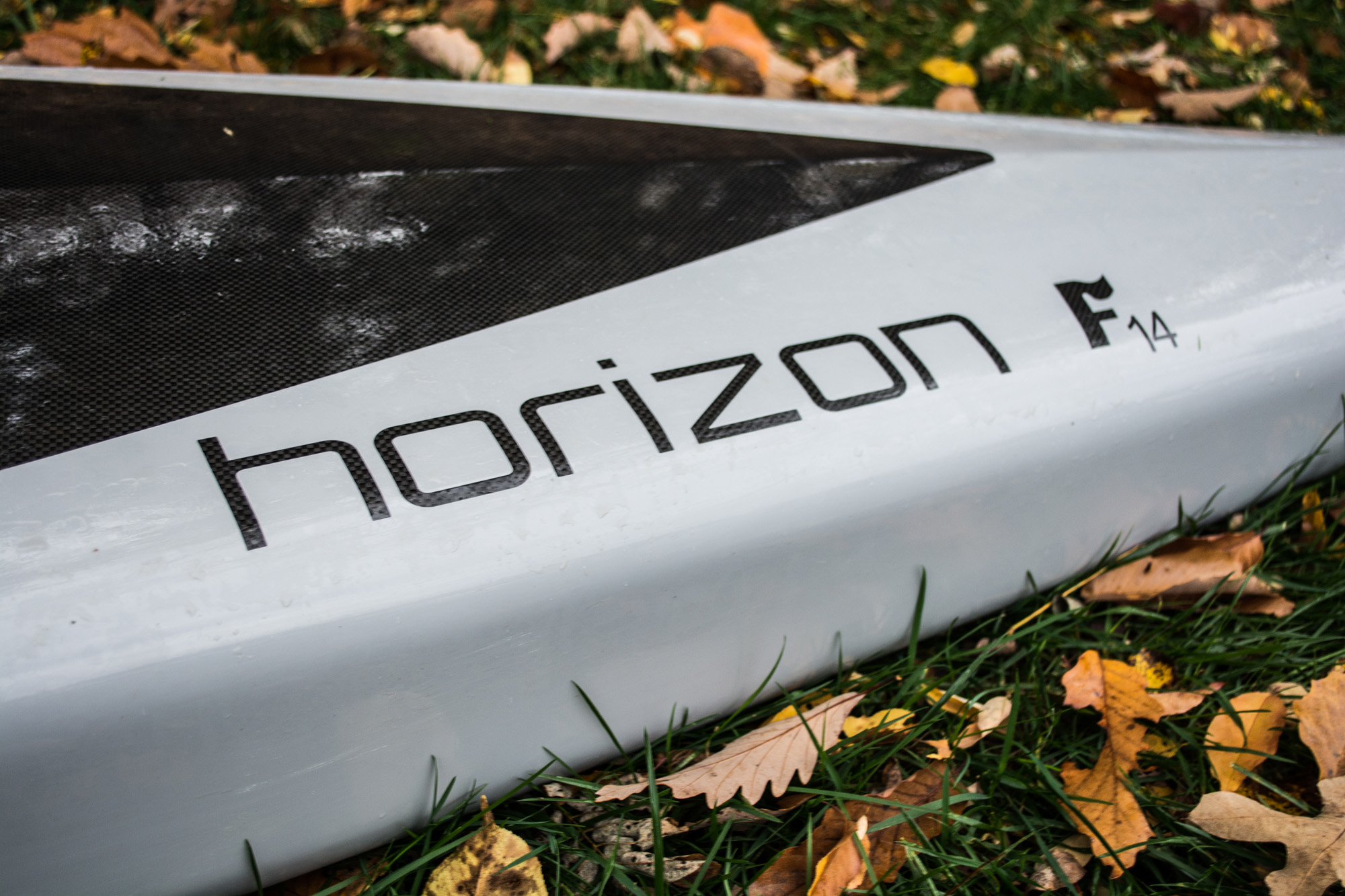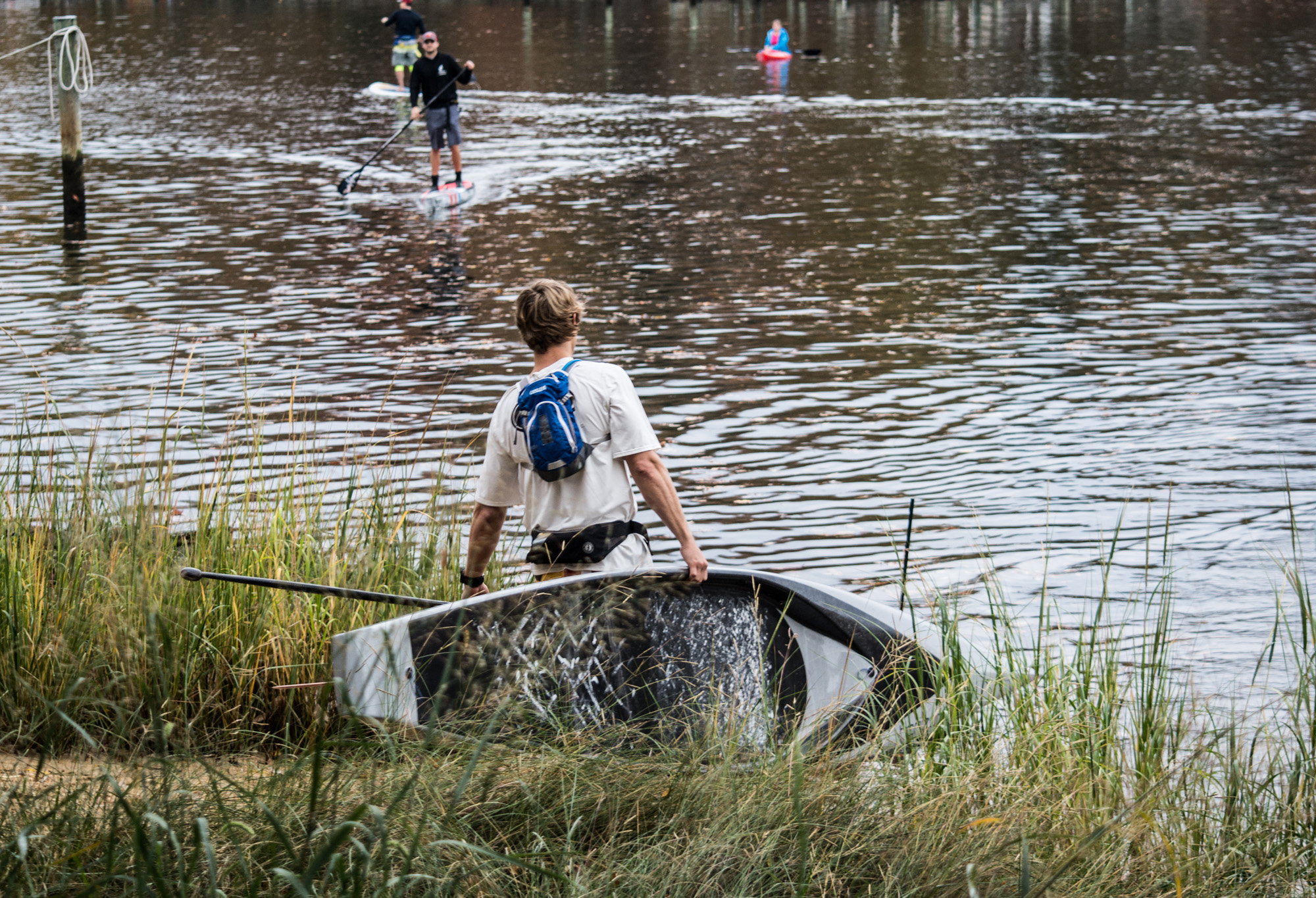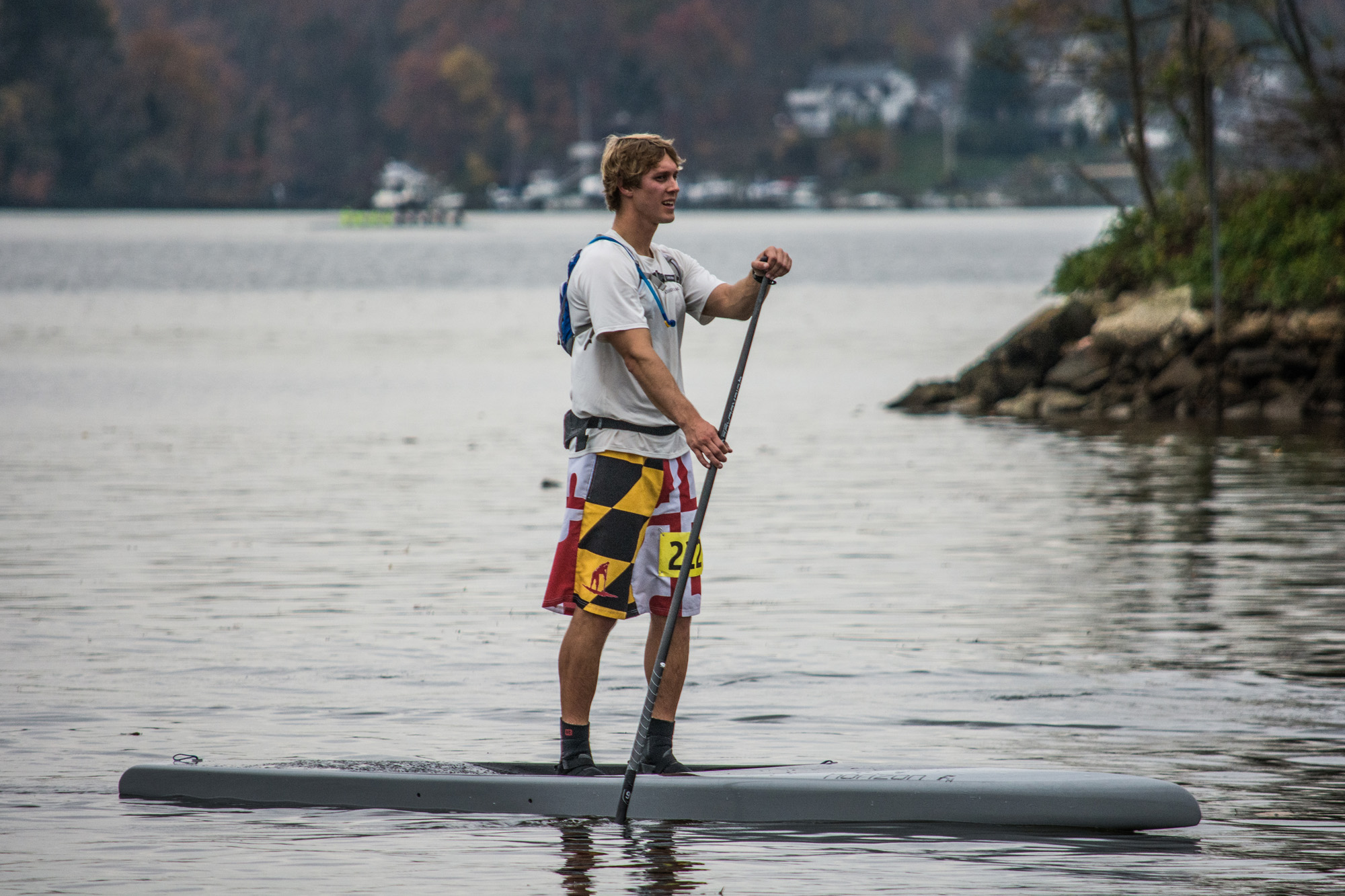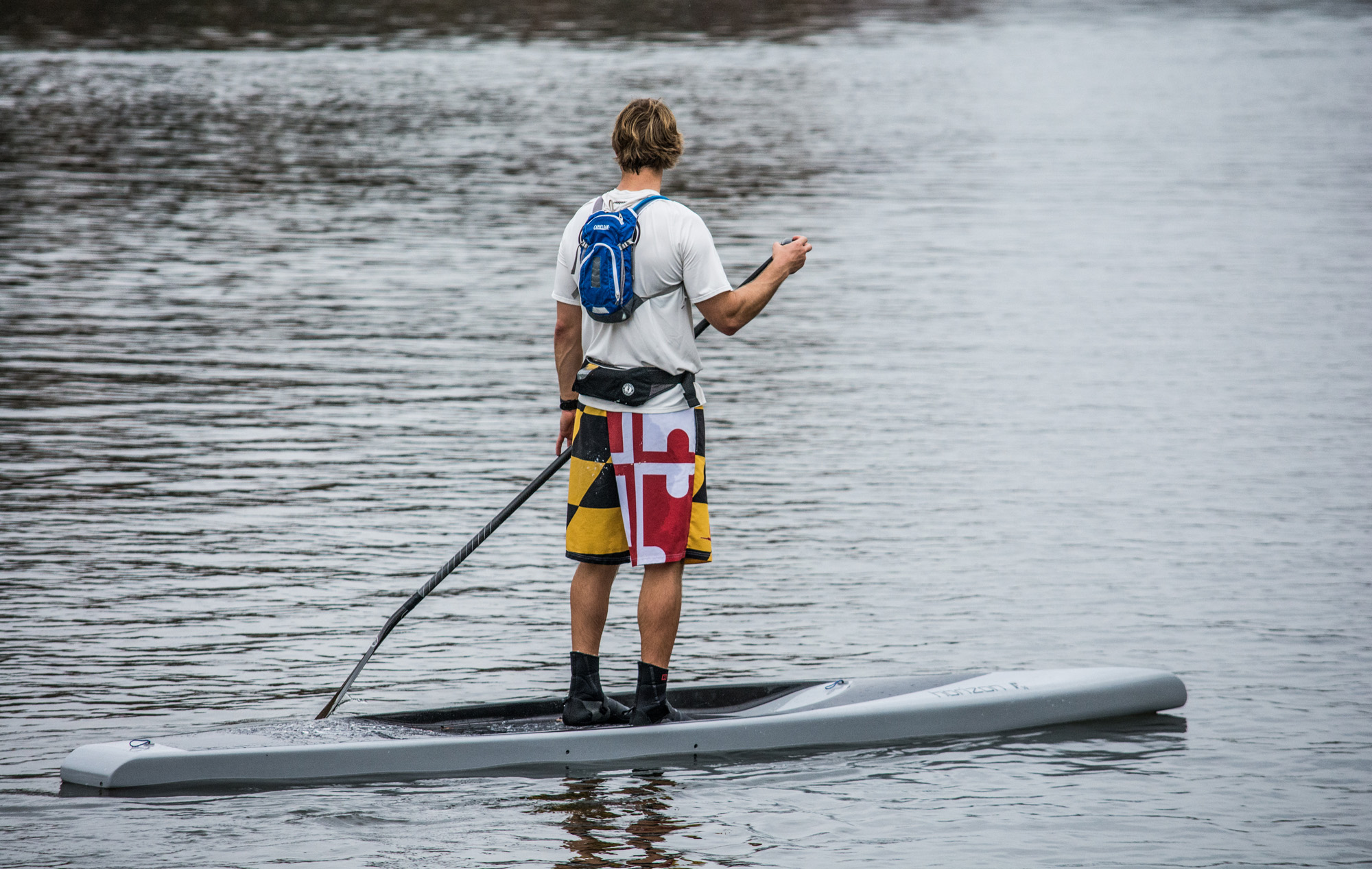
A 14ft. paddleboard, designed for flatwater and estuary races. Features a wave-piercing bow and a subtle peak along the centerline of the deck, allowing the bow to quickly shed water and return to the surface.
At 14ft x 26.5in., the shape has a volume distribution and rocker curve to maintain the desired combination of low wetted surface and wave drag. It has enough shape to the rocker curve to maximize dynamic lift when paddling in waves, but without carrying the same wetted surface penalty seen in the competition’s forward sections. The design maintains fullness through to the knuckle so that “effective” waterline length is maintained when paddling in chop, but not so much that the board “trips” over itself.
The wave piercing bow is probably the most distinctive feature of the board. A full bow will be “excited” by wave encounters (running into the trough of the wave in front). This will slow the board, requiring more energy to get up and over the next wave. The wave piercing bow penetrates the wave in front without being dramatically excited and avoids a big drag penalty which would result in a loss of speed. It then relies on the buoyancy and shape of the rocker curve in the forward sections to lift the bow up before it begins to dig in. This, combined with a subtle peak along the centerline of the deck, allows the bow to quickly shed water and return to the surface. This bow design works so well, you can only grin at each wave you slice, while the competition slaps along in your wake.
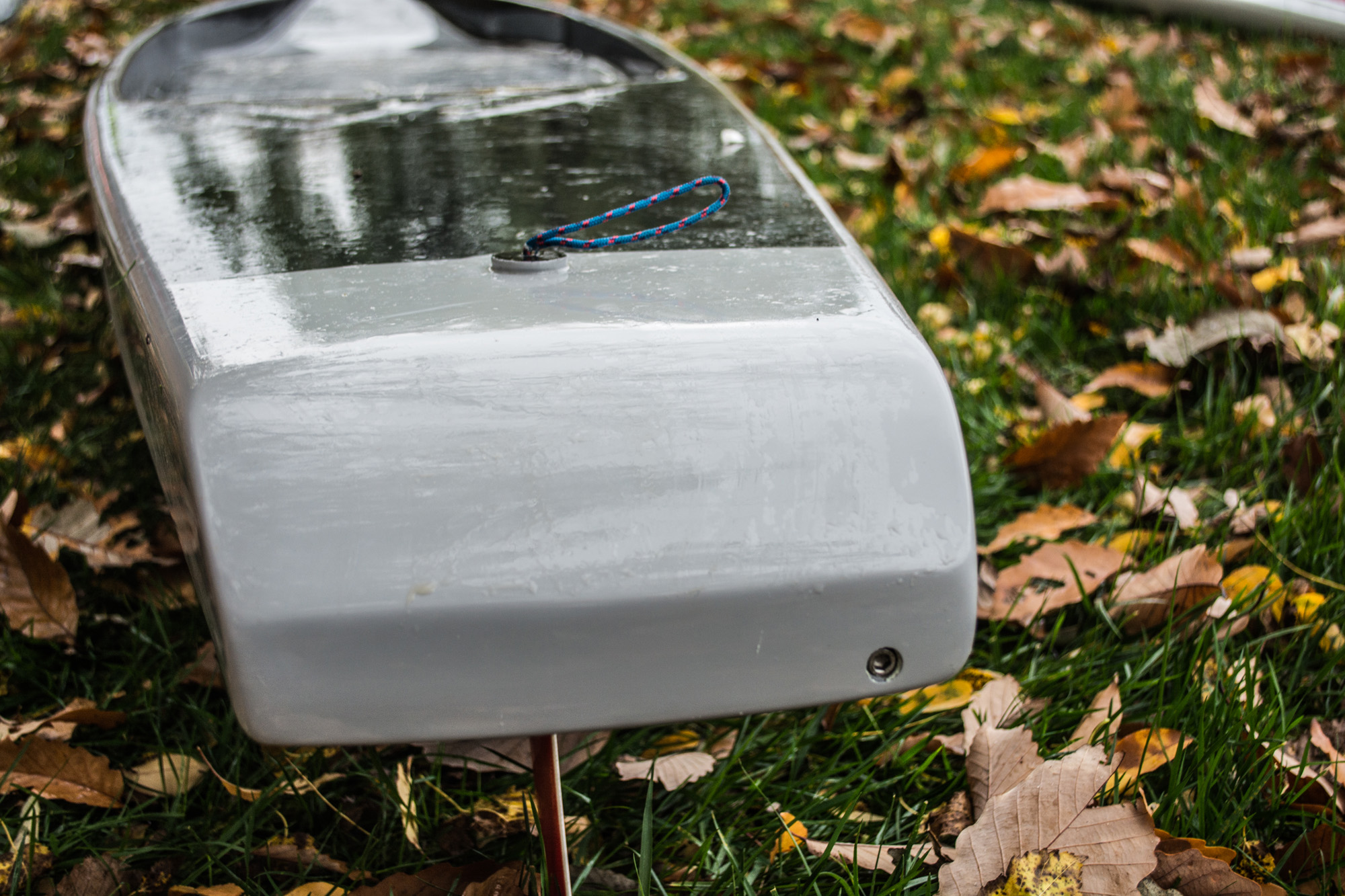
Hard, almost chine-like rails, are a common feature on many boards. This is one way to maximize stability for the lowest possible wetted surface but does not account for the drag associated with the vortices shed from the hard corners that are created. The Horizon F14 has much more gradual rails, reflecting FYD’s flow analysis in this area in an effort to find the right balance between wetted surface area, rail radius and total drag. Given the requirement for the 14ft. board to be able to complete mark turns, the rails harden significantly in the aft quarter of the board. On deck, the cockpit rises subtly into the transom, with sufficient width to allow the paddler to move towards the tail, for the turn.